

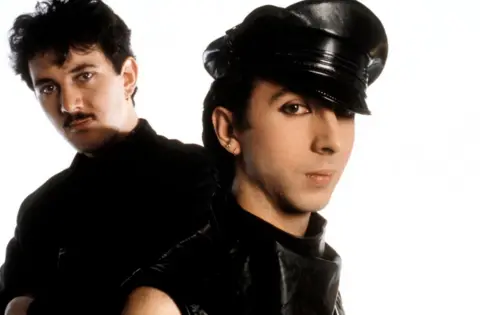
The talented musician, a key member of the groundbreaking 1980s synth-pop band Soft Cell, has died at the age of 66.
Together with vocalist Marc Almond, the team achieved a worldwide hit with their version of Gloria Jones' the classic track Tainted Love in 1984, and their first record Non-Stop Erotic Cabaret is regarded as a classic of synth-pop.
He later founded the pioneering electronic act The Grid, who secured chart success with 1994's the hit Swamp Thing.
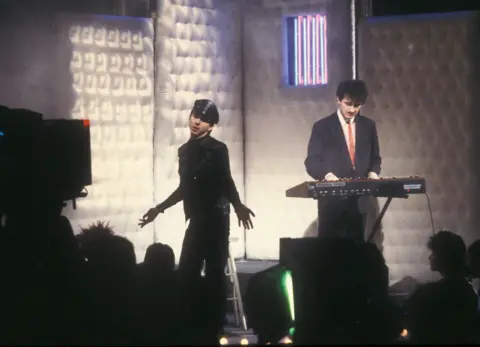
Ball passed away peacefully in his sleep at his residence in London on Wednesday 22 October, only a short time after performing a headline show with Soft Cell at the Rewind music event in the Thames-side town.
Recent Health Challenges
At that show, Ball appeared in a mobility chair, as he had for the last two years, following a spate of ill-health.
"I managed to damage myself significantly," he stated in a recent interview. "I broke spinal bones in my spine and fractured about multiple ribs and broke my arm."
After catching pneumonia and suffering from blood poisoning, he was put in an induced coma and stayed in the hospital for half a year.
However, he had been in "high spirits emotionally" over the summer, as he was developing a new album with Almond, titled the upcoming Danceteria, which is set for release next year.
"He was focused and very pleased with the latest project that we actually finished only a short time ago," stated the vocalist in a tribute.
"It's truly heartbreaking as 2026 was completely planned to be such an positive year for him, and I find comfort from the fact that he listened to the completed album and believed that it was a masterpiece."
Heartfelt Messages
Almond referred to his collaborator as "an exceptionally talented musical genius", adding: "He was the core essence of Soft Cell and I'm very proud of our body of work.
"Thank you Dave for being an immense part of my existence and for the songs you gave me. I couldn't be where I am without your influence."
Richard Norris from The Grid, shared his condolences, recalling Ball's "endless laughter" and "steadfast support".
"Forming a duo with someone is different from being in a band, the connection is very tight," he continued.
"That was the case with us. We went through so many remarkable, incredible, memorable experiences together. Thank you, Dave."
Early Life
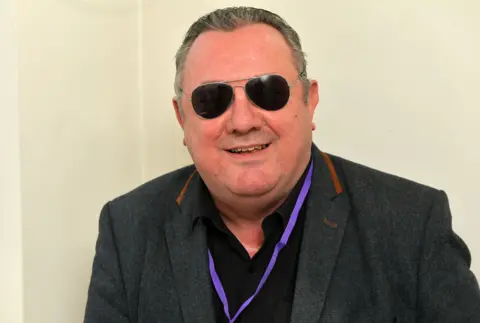
Brought into the world into a one-parent family in Chester in 1959, Ball was put up for adoption when he was 18 months old.
He was raised in Blackpool with his new family his caregivers, who altered his first name from Paul to his adopted name, together with his younger sister his sister, who was similarly welcomed.
He encountered Almond at Leeds Polytechnic in 1977, where they were both studying fine arts. Fuelled by a mutual passion of a music genre, they formed Soft Cell the very year, and quickly produced an extended play.
Musical Partnership
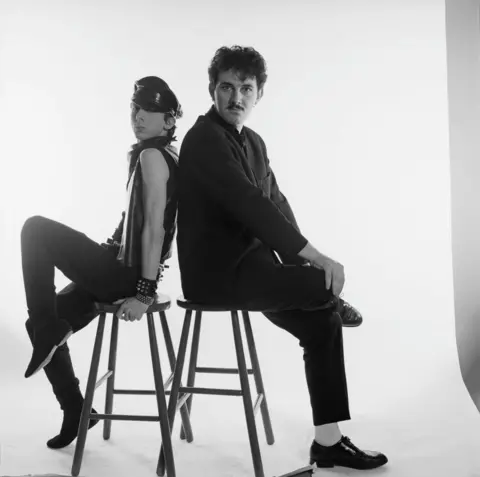
The duo were an distinctive combination: Ball was the reserved musician, hunched over his synthesizer, while Almond was a flamboyant performer, all sparkle and eye-liner; but they achieved a unique creative synergy.
Ball had cultivated a interest with electronic instruments after watching Kraftwerk appear on BBC science show a popular series, and began to marry dark electronica to the catchy tunes Almond was composing.
Their signature song became the United Kingdom's second biggest-selling song of the early 80s, shifting millions of copies globally. Alongside successful tracks by other artists, Human League and electronic acts, it contributed to cleared the path for the electronic music style of the 1980s.
The track was also featured on their first album, their initial LP, which spawned two further high-charting hits: Bedsitter and Say Hello, Wave Goodbye.
They continued the record up with the separate release, Torch, which reached at number two in the following year.
Career Highlights
Success had its upsides. "I enjoyed being able to purchase my first home, having money and travelling, which might seem like a beauty queen," Ball not long ago shared with a publication.
But it also presented problems. "Sudden riches meant we could purchase substances to relieve the boredom" of press appearances and TV performances, Ball explained.
"I know that's a cliché, but it's a cliché for a good reason, because it applies for so many musicians."
Amidst the hedonistic lifestyle, the duo were also growing distant, but they managed to create a follow-up classic album - the unconventional, edgy and aptly-titled The Art Of Falling Apart.
They released one more LP, their 1984 release This Last Night In Sodom, before ending the group to concentrate on individual endeavors.
Almond went on to have a prosperous individual path, including the chart-topping single Something's Got A Hold Of My Heart; while Ball formed The Grid, who mixed acid house with ambient pop over a enduring partnership.
Later Work and Comebacks
Soft Cell reunited in 2001, producing the Top 40 album Cruelty Without Beauty.
After a further hiatus, they returned in 2018, issuing the new tracks Northern Lights and Guilty (Cos I Say You Are) before performing what was supposed to be a final performance at the large venue on September 30, that year.
Yet, they remained active, recording their latest project, Happiness Not Included, during the 2020 Covid lockdown.
Ball lately described the duo's new album as a homage to the NYC nightlife they visited while making their initial records.
He noted that his time in hospital had influenced the band's sound.
"I had unusual memories when I was coming and going of hospital because I was on pain medication," he explained to a music magazine.
"Our latest tracks are a electronic representation of the sounds in my head from those days.
"In parallel, it's about the times me and Marc got up to in the 80s."
The final mixes were completed only a short time before Ball died. It is due for release in Spring 2026.


